
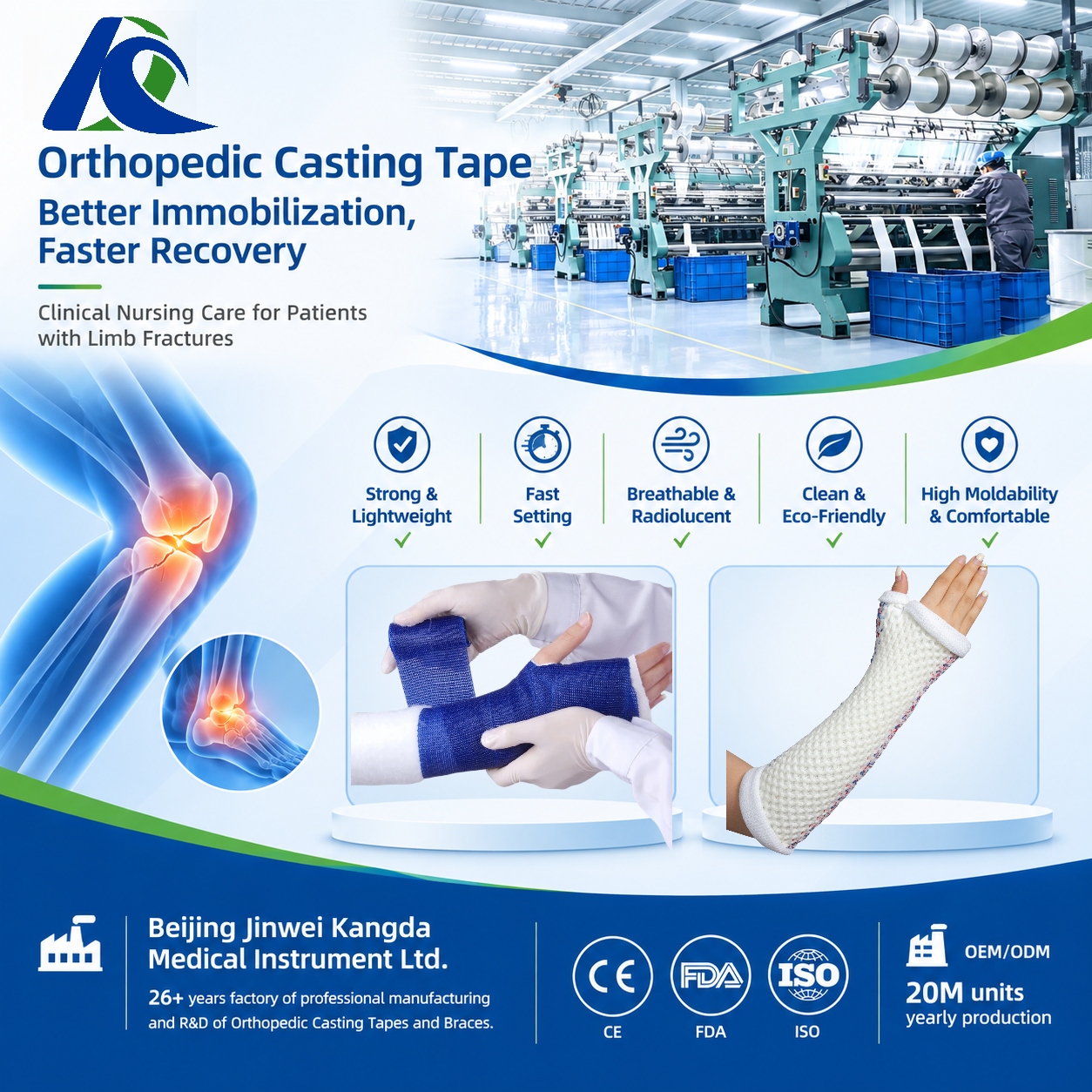

Usage and Application of Fiberglass Orthopedic Bandages
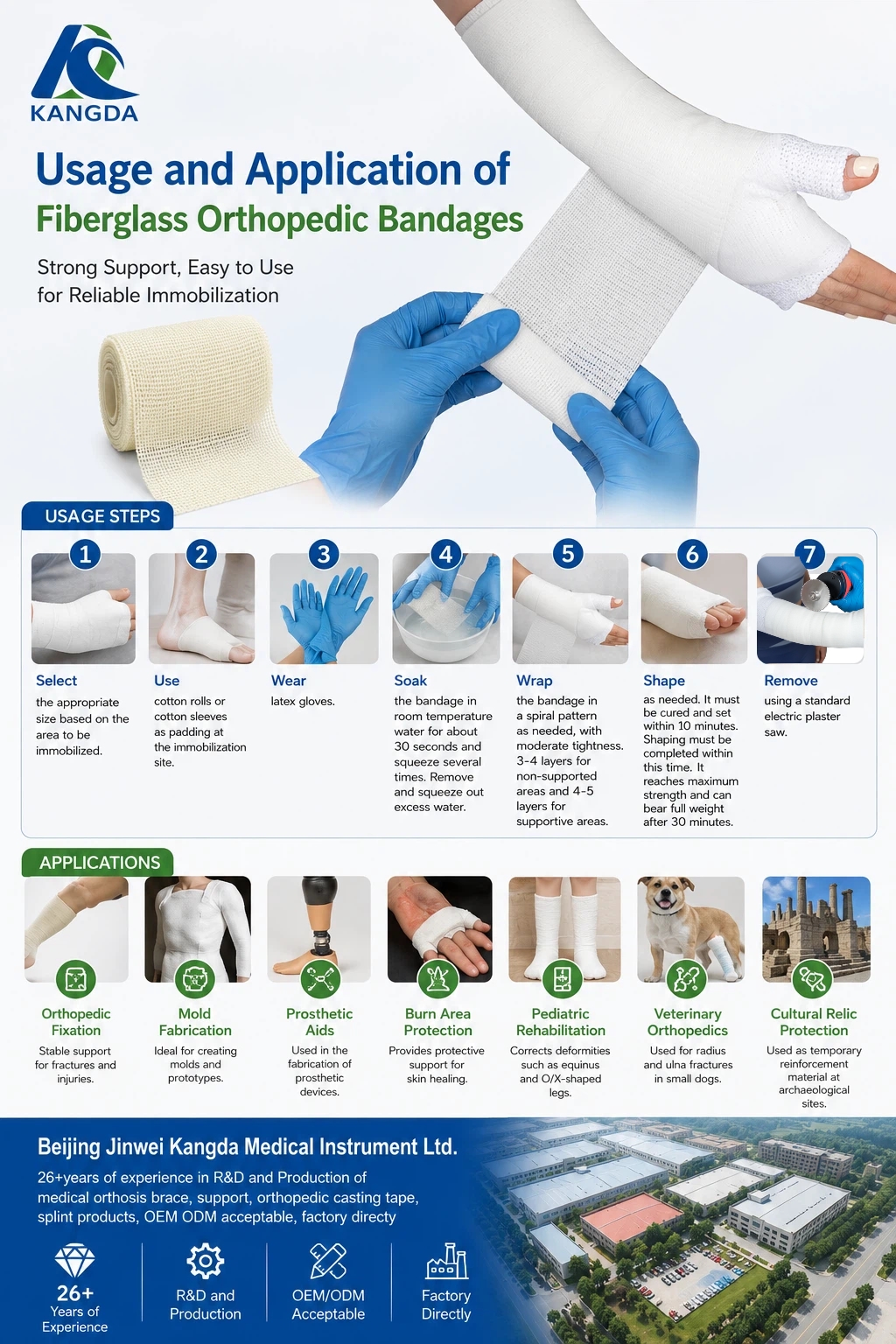
1. Select the appropriate size based on the area to be immobilized.
2. Use cotton rolls or cotton sleeves as padding at the immobilization site.
3. Wear latex gloves.
4. Open the packaging, remove the bandage, soak it in room temperature water for about 30 seconds and squeeze several times. Remove and squeeze out excess water.
5. Wrap the bandage in a spiral pattern as needed, with moderate tightness. 3-4 layers for non-supported areas and 4-5 layers for supportive areas.
6. Shape as needed. It must be cured and set within 10 minutes. Shaping must be completed within this time. It reaches maximum strength and can bear full weight after 30 minutes.
7. Remove using a standard electric plaster saw.
Applications include orthopedic or orthopedic fixation, fabrication of molds, prosthetic aids, and protective supports for burn areas.
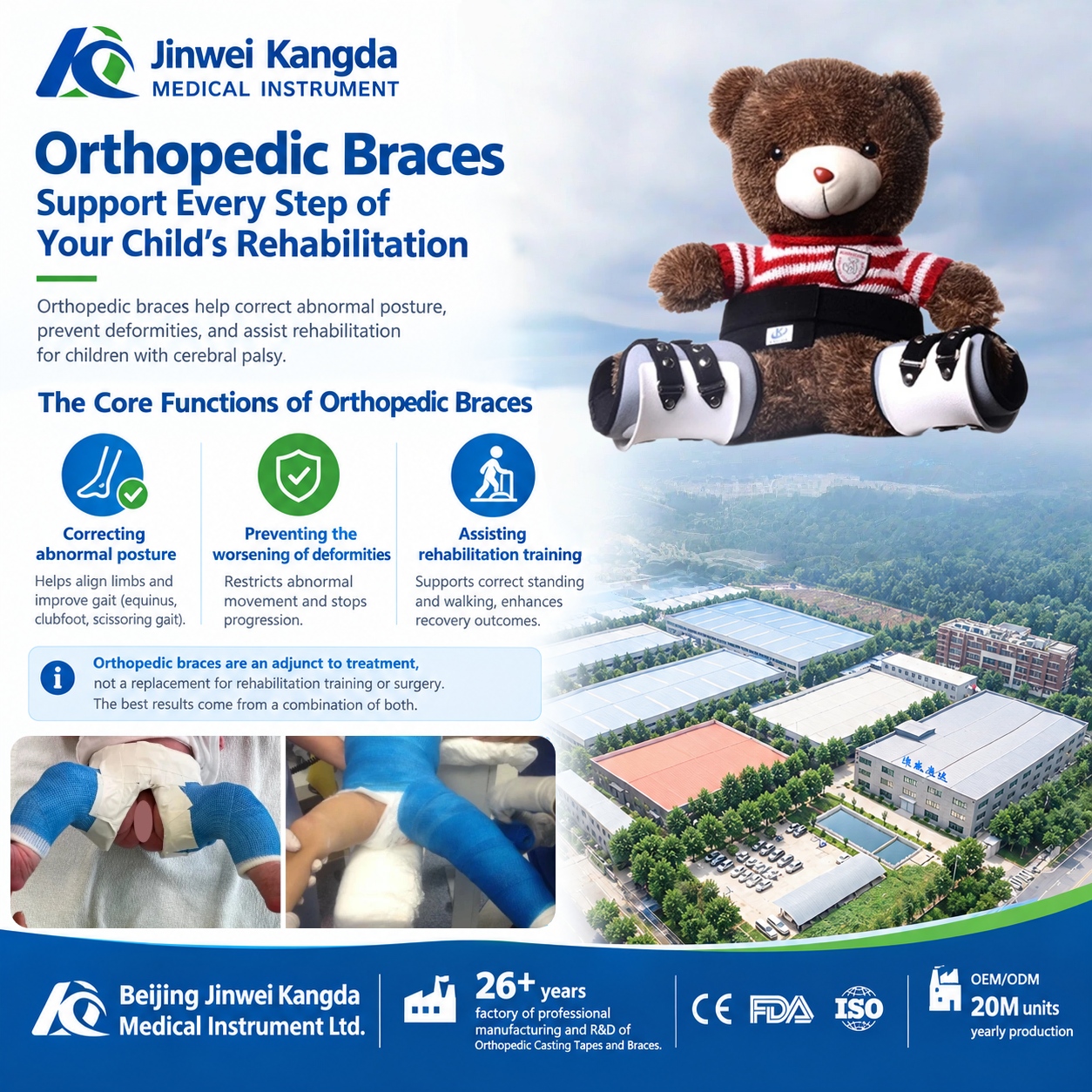
In addition, it is also used in the field of pediatric rehabilitation to correct various deformities such as equinus and O/X-shaped legs; in veterinary orthopedics for midshaft radius and ulna fractures in small dogs; and in the field of cultural relic protection, it can be used as a temporary reinforcement material at archaeological sites.