Kangda Low‑Temperature Thermoplastic Orthosis: Material Properties & Clinical Applications
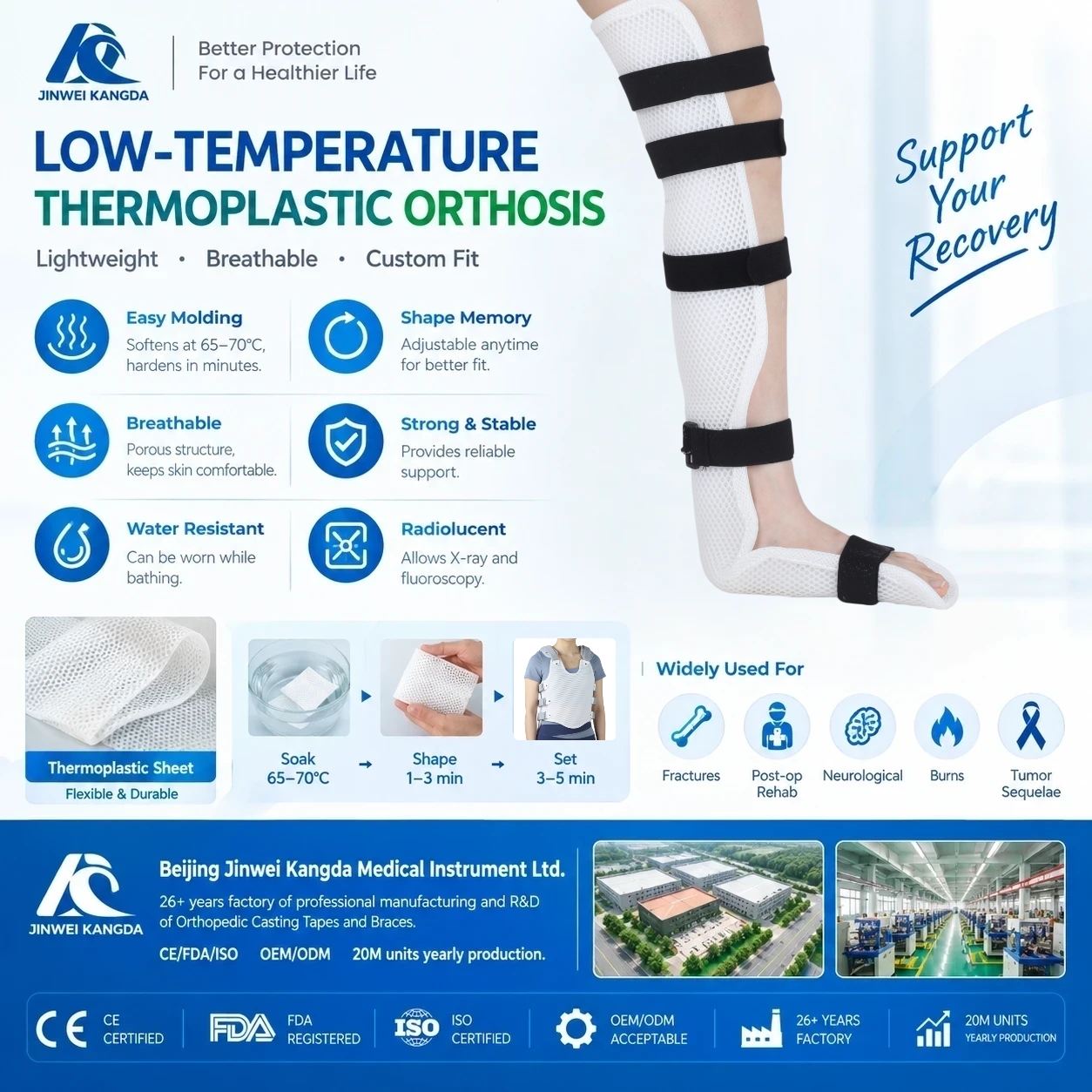
Low‑temperature thermoplastic sheet is an innovative high‑molecular‑weight polyester composite processed via sophisticated physical and chemical treatments. At room‑temperature dry environments (10 °C‑30 °C), its molecular structure remains stable. When immersed in hot water at 65‑70 °C for 1‑3 minutes, the sheet softens rapidly. After moulding, it hardens within 3‑5 minutes under ambient conditions, making it an ideal material for external orthopaedic immobilisation.
Key Material Advantages
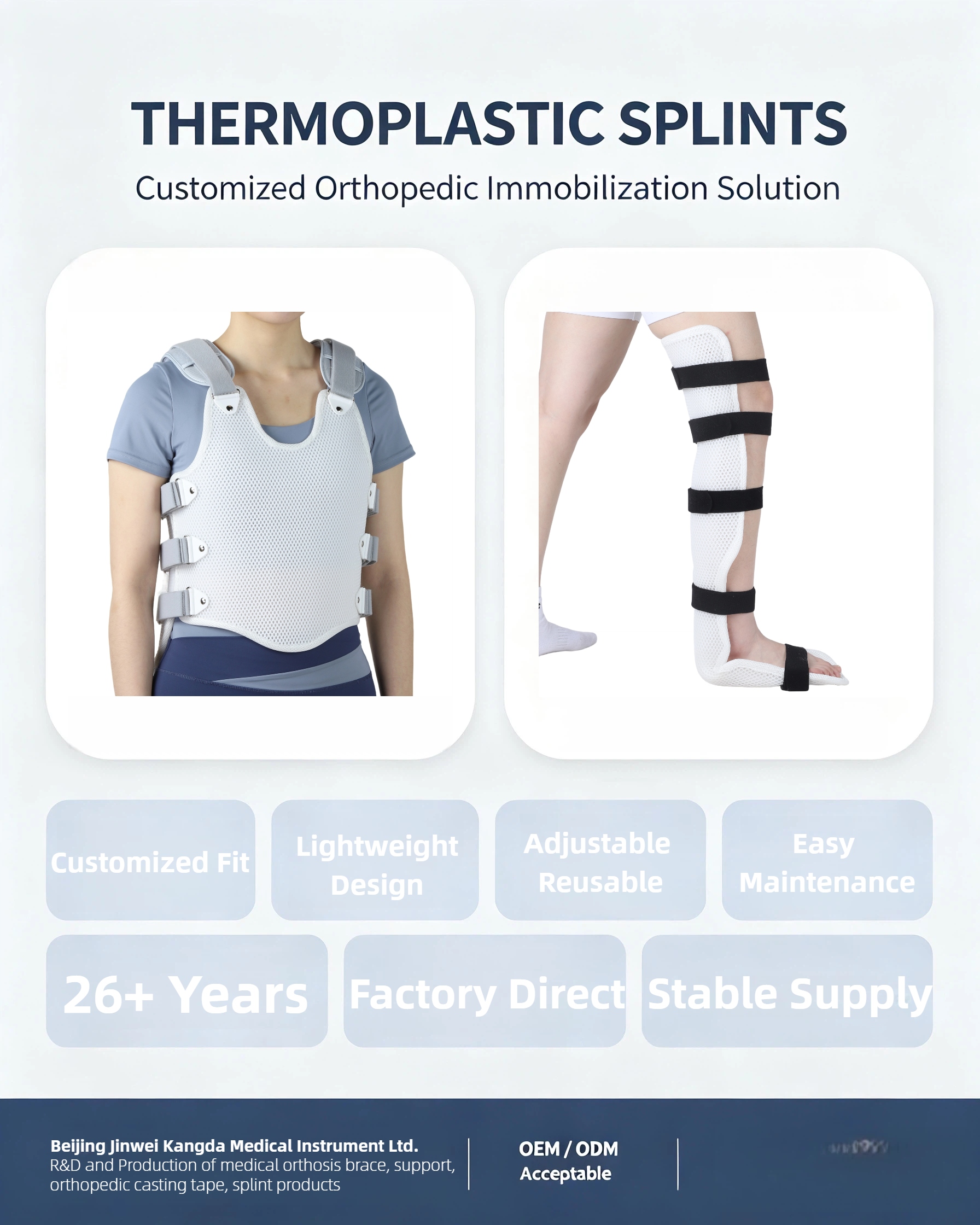
Excellent Mouldability Once softened, the material conforms closely to complex body contours. It can be freely shaped to fit anatomical structures such as fingers and palmar arches for well‑fitted custom orthoses.
Shape‑Memory Performance Thanks to its shape‑memory property, adjustments can be conveniently performed throughout the whole treatment course to accommodate swelling changes or rehabilitation progression.
Light‑Weight & Breathable The porous high‑polymer structure enhances air circulation, facilitates heat dissipation and perspiration evaporation, and improves wearing comfort for long‑term use.
High Mechanical Strength & Self‑Adhesion After hardening, the sheet delivers robust structural support and stable immobilisation with minimal deformation. When softened and kept surface‑dry, it features self‑adhesive properties, simplifying tubular‑style orthosis fabrication.
Water‑Resistant The orthosis can be cleaned with water at room temperature, allowing patients to wear it during bathing for better daily‑life compliance.
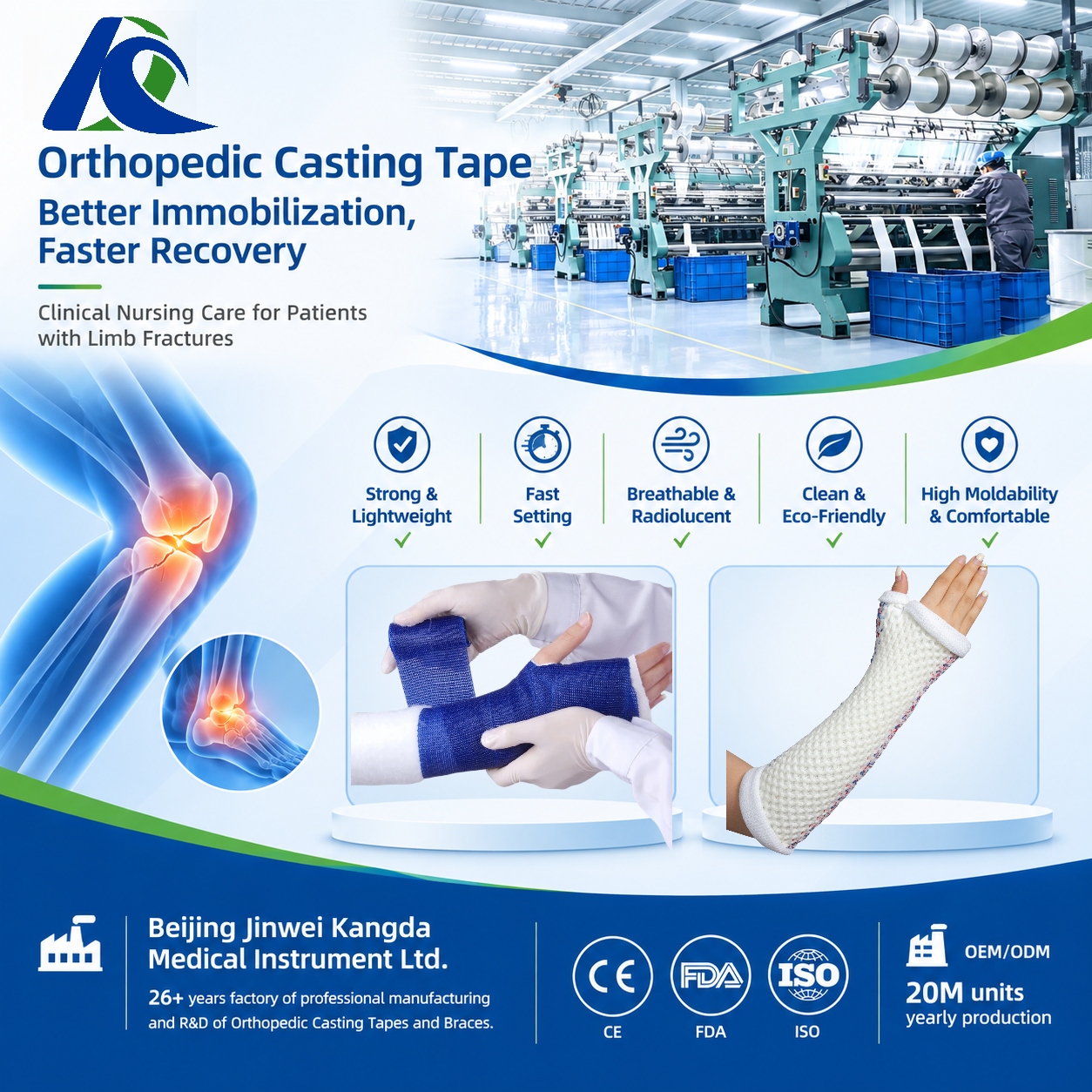
Radiolucent Property Fully transparent to X‑rays. Clinicians can directly assess bone healing progress without removing the orthosis during radiographic examinations.
Eco‑Friendly Composition Service life reaches up to 2 years. The material is biodegradable upon end‑of‑life disposal for reduced environmental impact.
Clinical Applications
Low‑temperature thermoplastic orthoses are widely utilised in rehabilitation management for musculoskeletal disorders, central nervous system conditions, neuromuscular diseases, inflammatory pathologies, burn injuries, tumour sequelae and other clinical scenarios.
Although orthosis types vary across different diagnoses, core therapeutic principles remain consistent: immobilisation, alignment correction, as well as assistance or restriction of limb movement. In general, orthoses realise five major clinical functions: protection, immobilisation, deformity correction, movement assistance and function compensation. A single orthosis may serve one or multiple therapeutic purposes according to patient needs.
Compared with high‑temperature thermoplastic materials, low‑temperature thermoplastic sheets offer relatively lower mechanical strength. Therefore, they are primarily applied for upper‑extremity orthosis fabrication. Selected variants can be used for trunk and lower‑limb positioning and posture maintenance. Except for paediatric patients’ limbs, this material is not suitable for weight‑bearing or high‑stress body segments.