

Thoracic Lumbar Orthosis
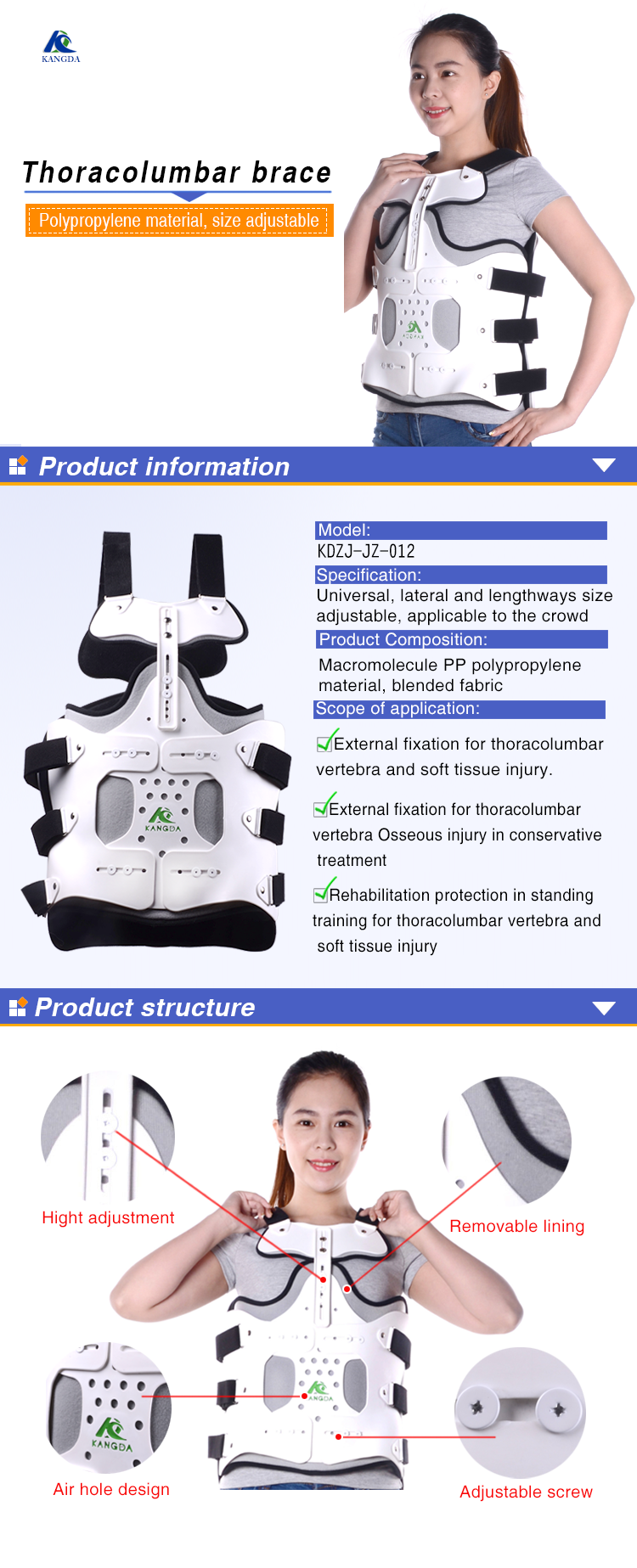
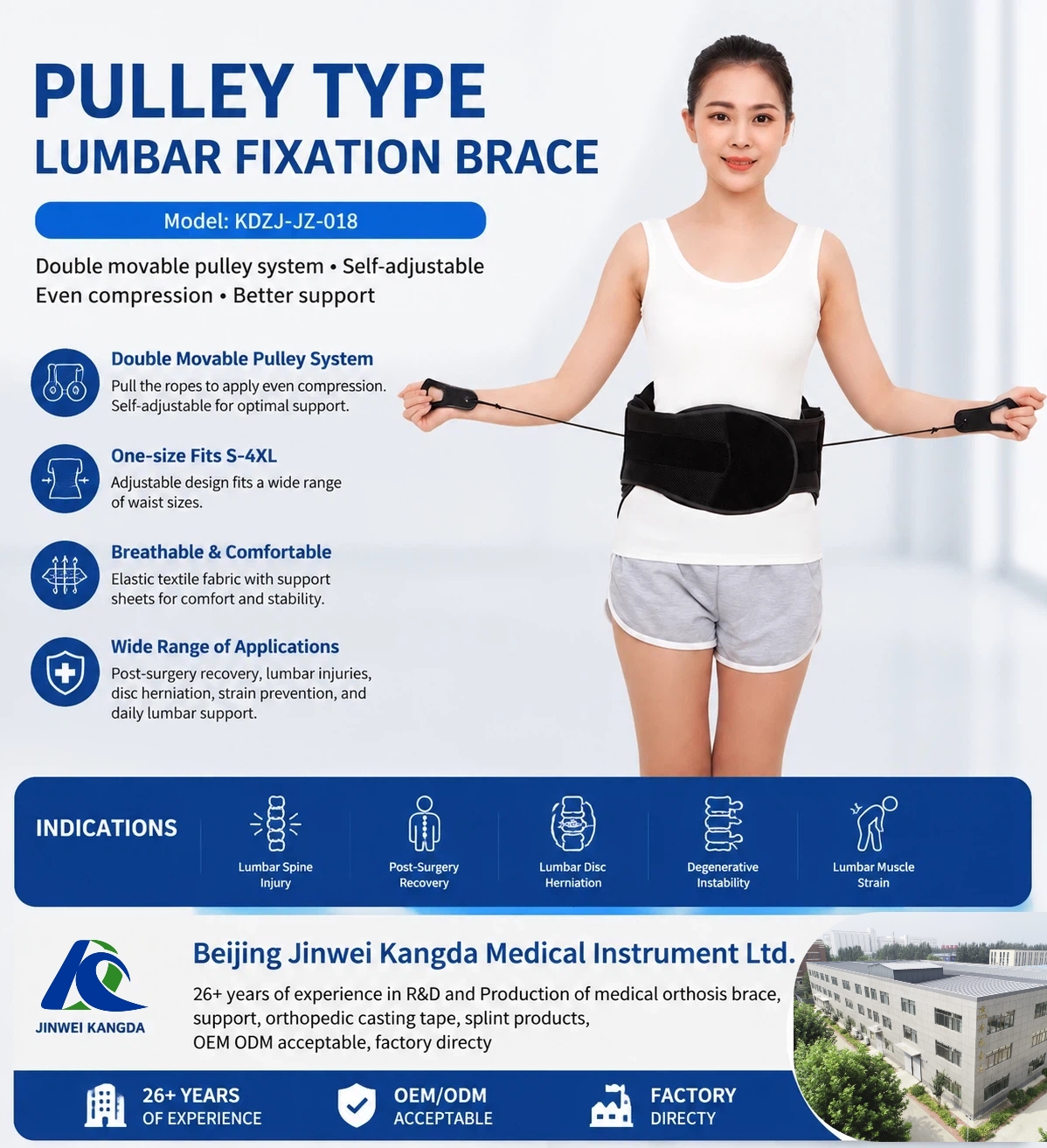
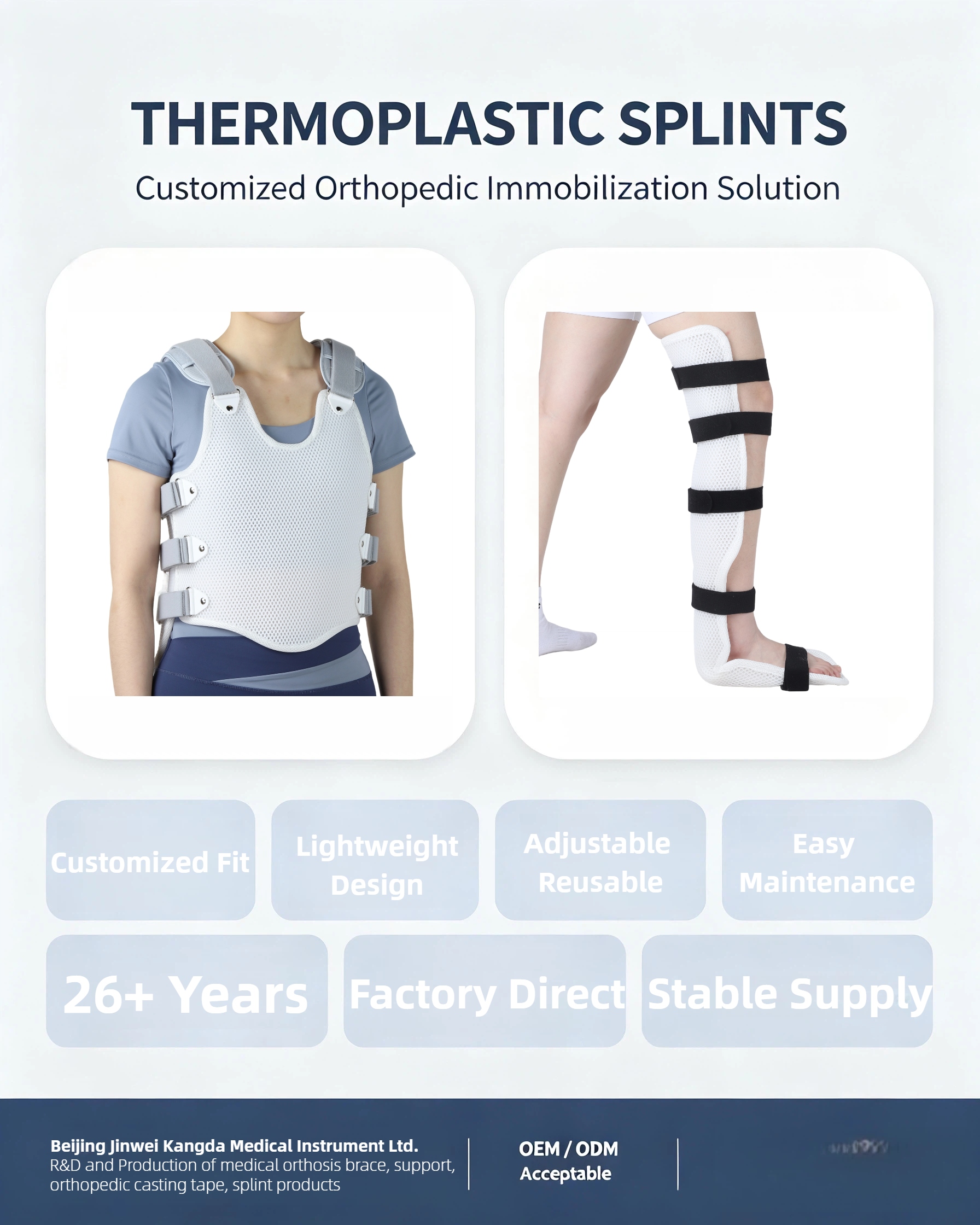
The intended uses of this Thoracic Lumbar Orthosis are various. It can be used as external fixation after surgery for thoracic and lumbar vertebral bodies and soft tissue injuries, and external fixation for thoracolumbar vertebra osseous injury in conservative treatment. Also, it can be worn to act as rehabilitation protection in standing training for thoracolumbar vertebra and soft tissue injury. What’s more, it can provide protection for acute injuries of the spine, especially for cervical spine.
In case of above accidents or injuries, How to wear?
We would like to do the introduction with details as following,
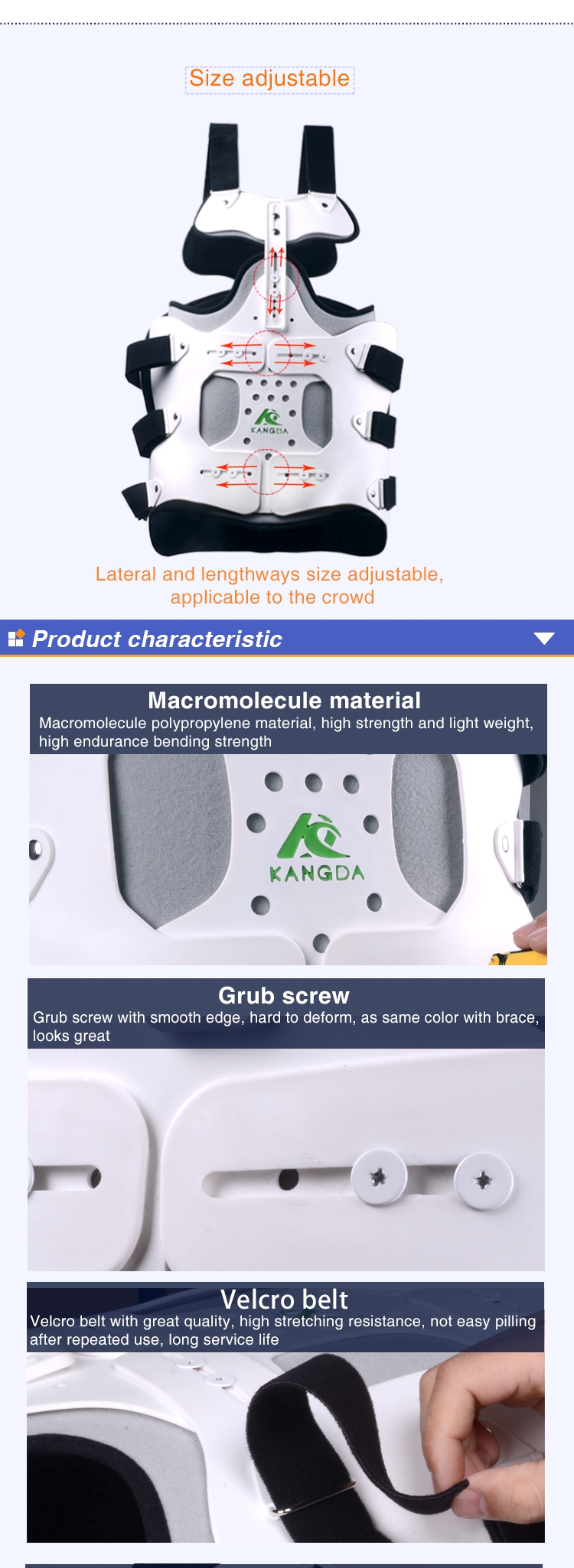
Before wearing it, pls select an appropriate brace for operation according to clinical indications, Then use a measuring tape to test the patient's circumference at the umbilical level, obtain the data and adjust the horizontal size of the brace and the length of the adhesive tape according to the size parameters, and put the lining in place.
There are two wearing methods: supine position and standing position:
Supine position
① With the assistance of medical staff, move the patient to the side position as a whole, quickly place the back piece of the brace on the patient's waist and back, and then return to the supine position;
② Use the front piece of the brace to measure the patient's body and adjust the height of the chest compression piece, so that the upper end of the front piece is limited to the clavicle and the most bulging part of the lower end coincides with the patient's iliac crest, and the fixing belt is fixed in turn;
③ Assist the patient to sit up slowly, adjust the height of the chest compression piece of the back piece of the brace, so that the upper end of the back piece is limited to the scapular spine and the lower end coincides with the body curve;
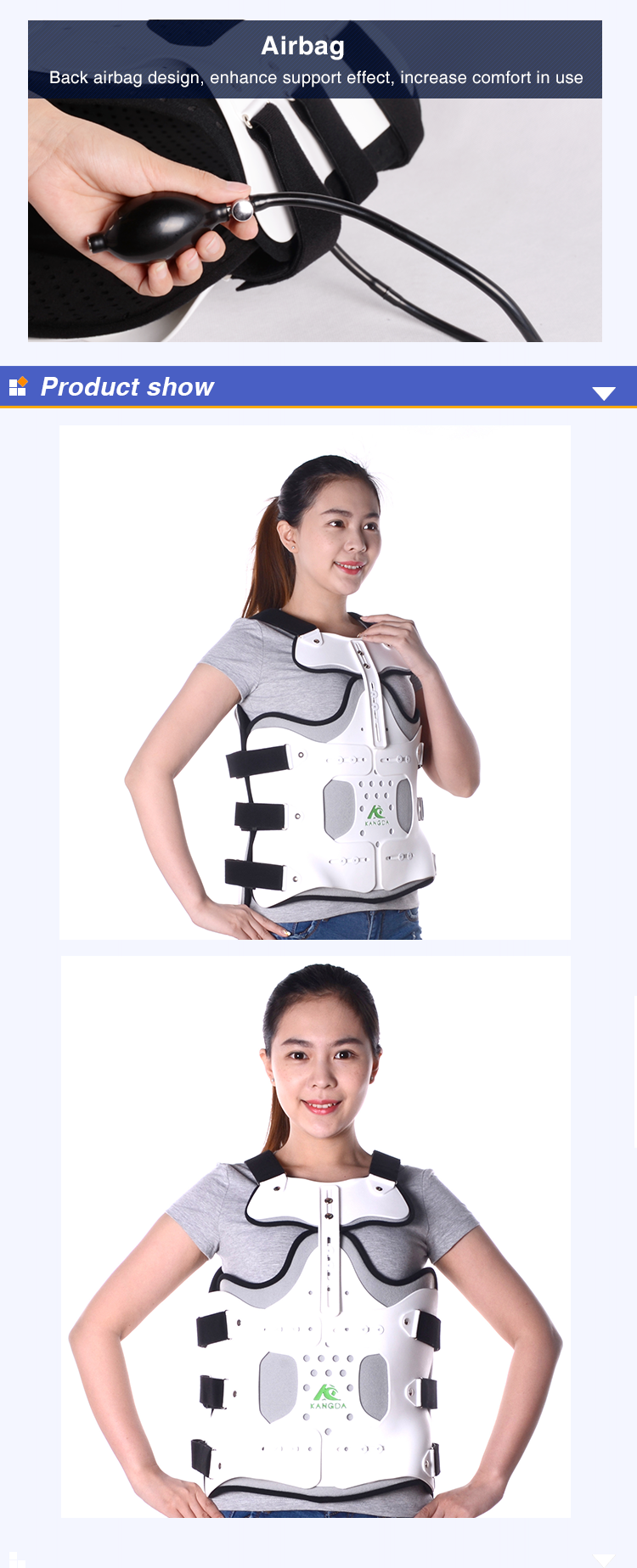
④ Fix the brace fixing belt in turn, and the tightness should be appropriate so as not to affect the patient's breathing.
Standing position
① Use the front and back pieces of the brace to measure the patient's body and adjust the height of the front and back chest pieces of the brace, so that the upper end of the front piece is limited to the clavicle and the most bulging part of the lower end coincides with the patient's iliac crest, and the upper end of the rear piece is limited to the scapular spine and the lower end coincides with the body curve;
② With the assistance of medical staff, place the back and front pieces of the brace on the dorsal and ventral sides of the patient's trunk respectively, and fix the brace straps in turn. The tightness should be appropriate so as not to affect the patient's breathing.