How to Choose the Best Carpal Tunnel Braces for Effective Relief?
Choosing the right Carpal Tunnel Braces can be a daunting task. Many products claim to relieve discomfort, but not all deliver effective results. It's crucial to understand what makes a brace effective. Materials, design, and adjustability play key roles.
When selecting Carpal Tunnel Braces, comfort and support are vital. A well-fitted brace can alleviate pressure on the median nerve. It should provide enough support without being overly restrictive. Consider a brace that allows for wrist movement yet keeps your hand stable.
Reflecting on personal needs is essential. What works for one person may not work for another. Individual circumstances vary greatly. Finding the ideal brace might require some trial and error. It is a personal journey toward improving hand health.
Understanding Carpal Tunnel Syndrome and Its Symptoms
Carpal Tunnel Syndrome (CTS) affects many people. It occurs when the median nerve is compressed at the wrist. This can cause discomfort and tingling in the fingers. Symptoms often worsen at night. Many wake up with numbness and pain. Tasks like typing or gripping objects can become painful. These signs are important to recognize early.
Understanding these symptoms can lead to effective management. People might notice a weakening grip or difficulty with fine motor skills. Simple actions, like holding a pen, may become challenging. Ignoring these signals can worsen the condition. Reflection on daily habits is crucial. Repetitive motions can strain the wrist. Taking breaks is essential. Adjusting workspaces to promote wrist health is also important. By acknowledging symptoms, one can seek timely help.
How to Choose the Best Carpal Tunnel Braces for Effective Relief?
| Brace Type |
Material |
Adjustability |
Comfort Level |
Recommended Use |
Price Range |
| Wrist Splint |
Neoprene |
Adjustable straps |
Moderate |
Daytime use |
$15 - $30 |
| Nighttime Brace |
Plastics |
Non-adjustable |
High |
Overnight use |
$20 - $40 |
| Compression Sleeve |
Elastic fabric |
Stretchable |
Very High |
Sports and activities |
$10 - $25 |
| Orthotic Gloves |
Cotton & spandex |
Adjustable fit |
Moderate |
Light use during the day |
$12 - $28 |
Key Features to Look for in Carpal Tunnel Braces
Choosing the right carpal tunnel brace can significantly improve your comfort. Look for adjustable straps. They ensure a snug fit, which is essential for effective support. A brace that fits well can prevent further irritation of the wrist. Breathable materials also matter. They keep your skin dry and comfortable during prolonged use.
Consider the level of restriction the brace offers. Some need complete immobilization, while others allow slight movement. It's important to find a balance that suits your daily activities. Take note of the brace's weight. A lightweight design provides support without feeling bulky. It can be frustrating if it hinders your mobility.
Additionally, check for padding. Soft padding enhances comfort, making it easier to wear for longer periods. However, excessive padding can become cumbersome. Reflect on your specific needs. Sometimes a simpler design may suffice, rather than an overly complicated brace. Finding the best carpal tunnel brace requires careful consideration and thoughtful choices.
Types of Carpal Tunnel Braces and Their Benefits
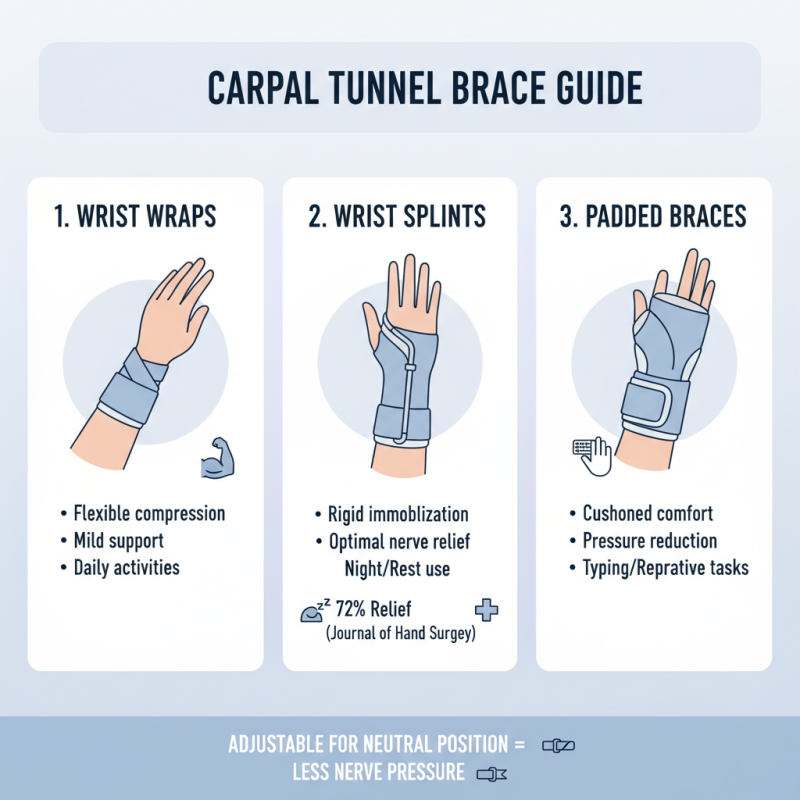
Carpal tunnel braces come in various types, each designed to provide specific relief. The most common types include wrist wraps, wrist splints, and padded braces. According to a study published in the *Journal of Hand Surgery*, 72% of patients reported relief after using a wrist splint consistently. These braces are typically adjustable, allowing for a snug fit that keeps the wrist in a neutral position, essential for reducing pressure on the median nerve.
Wrist wraps are often preferred for their lightweight design. They offer support while allowing some movement. However, their effectiveness varies. Many users find that too much mobility can hinder recovery. In contrast, padded braces provide more rigid support but can feel bulky. This can lead to discomfort during daily activities. A balance between support and mobility is crucial.
Research shows that wearing a brace during sleep can significantly reduce symptoms. A survey indicated that 85% of users felt improved symptoms when they consistently wore their brace at night. However, some individuals struggle with the adjustment. Getting used to wearing a brace takes time and patience. Finding the right balance may require trying different types to see what works best.
Guidelines for Proper Fit and Adjustment of Braces
Choosing the right carpal tunnel brace is important for relief. The fit must be snug without being too tight. Proper adjustment can make a big difference in comfort and support. A loose brace may not help your symptoms. Conversely, a brace that’s too tight can cause more pain.
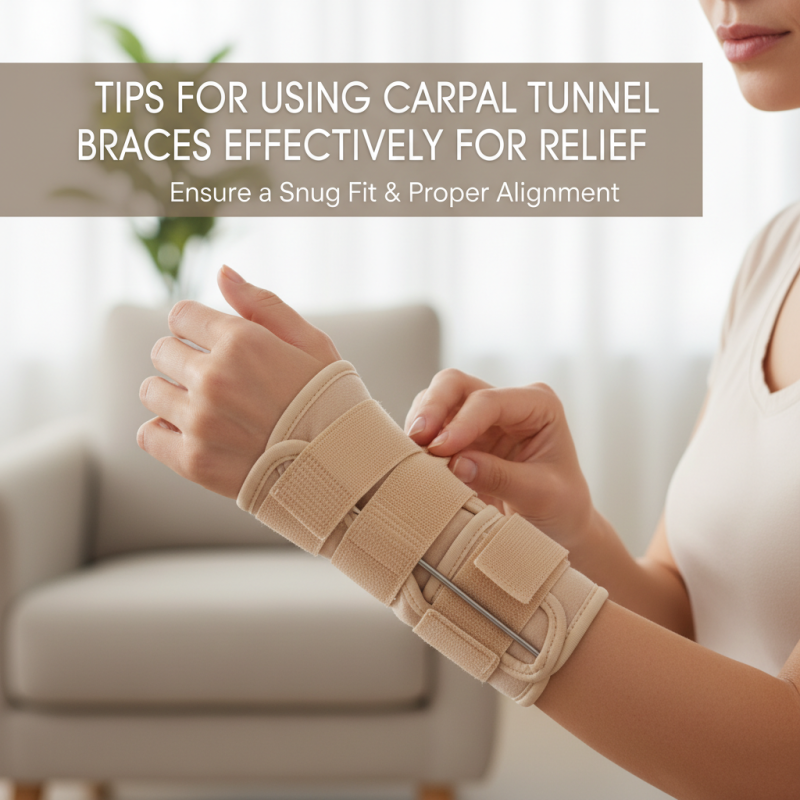
Measuring your wrist carefully is essential. Use a flexible tape measure for accuracy. The brace should support your wrist in a neutral position. You should be able to move your fingers freely. If you experience discomfort, try adjusting the straps. Many braces come with adjustable features that allow for a personalized fit.
Remember to consider the material as well. Breathable fabrics can help reduce sweating and irritation. Over time, wear and tear might alter the brace’s effectiveness. Regularly check the condition of your brace and replace it if necessary. Listening to your body is crucial. If it hurts, it might be time to rethink your choice.
Carpal Tunnel Brace Effectiveness Comparison
This bar chart illustrates the effectiveness ratings of carpal tunnel braces across five important dimensions: Comfort, Support, Durability, Adjustability, and Price. Each factor is rated on a scale of 1 to 10, providing insight into essential features to consider when selecting a brace for effective relief.