How to Choose the Right Medical Boots for Your Needs?
Choosing the right medical boots is crucial for recovery and mobility. Studies show that improper foot support can lead to complications. For instance, over 60% of patients report discomfort due to ill-fitting footwear. Medical boots are designed to provide stability and protect injuries. Yet, many people overlook fit and function when selecting these products.
A recent survey indicated that nearly 40% of users would benefit from personalized assistance in choosing medical boots. This highlights the need for informed decisions. Each medical condition requires specific features. For example, diabetic patients need boots that accommodate swelling and provide extra cushioning.
Not all medical boots are created equal. Some may fail to deliver the necessary support. This can lead to prolonged recovery times or additional pain. Reflecting on individual needs is vital. You might discover that the most popular model isn't the best fit for you. Prioritize comfort and support for optimal healing.
Understanding the Different Types of Medical Boots Available
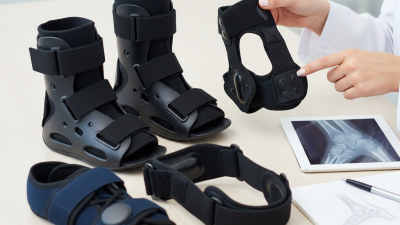
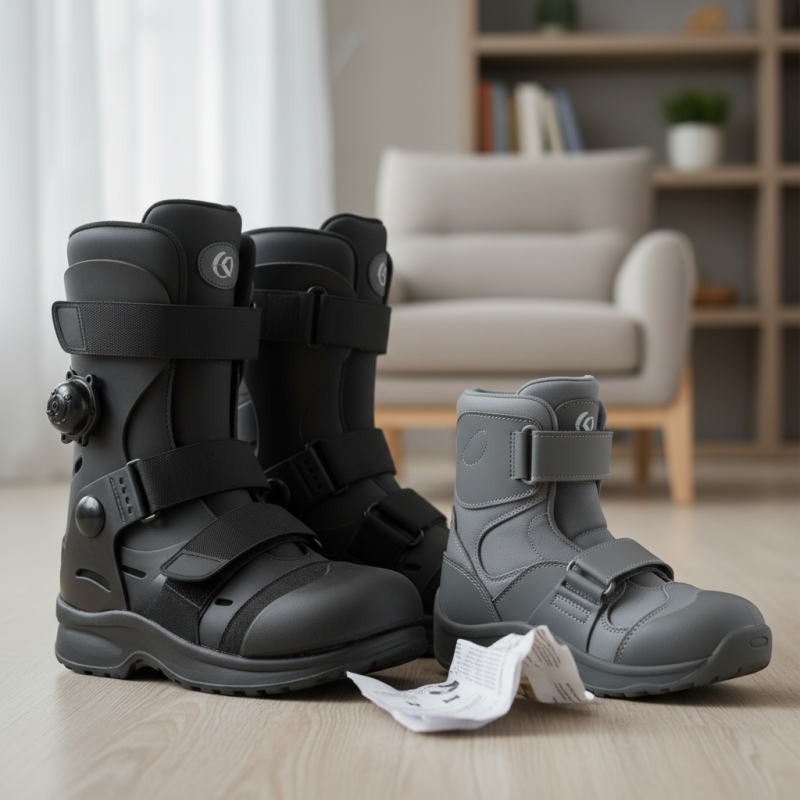
When considering medical boots, it's crucial to understand the different types available. Each boot serves a unique purpose. For instance, post-operative boots provide sturdy support after surgeries. They help in rehabilitation and prevent further injury.
Walking boots, on the other hand, allow mobility while protecting the injured area. These are ideal for fractures or soft tissue injuries.
Tips: Always consult with a medical professional before choosing a boot. Their input is critical for your recovery. Comfort is key. A poorly fitted boot can cause blisters or pain. Make sure it fits snugly but not too tight.
Rigid splint boots are for those needing complete immobilization. They limit movement to promote healing. Conversely, pneumatic boots can be adjusted for pressure. This helps with swelling and discomfort.
Reflect on your daily activities when choosing. If you need more mobility, a flexible boot might be appropriate. Yet, assess the risk of instability. Sometimes, more support is essential than mobility.
Evaluating Your Specific Medical Needs and Conditions
When evaluating your medical needs, consider the specific condition you have. Whether you are recovering from surgery, managing a chronic issue, or dealing with an injury, the right medical boot can make a difference. Think about the level of support required. Some conditions may need rigid support, while others can benefit from flexibility.
Tips: Assess your mobility needs. Can you walk unassisted? Or will you require crutches or a wheelchair? It’s crucial to reflect on your daily activities. Will you wear the boots for long hours? Comfort is key in prolonged use.
Also, consider the environment where you'll be wearing the boots. Will you be indoors, or do you need something for outdoor terrain? Look for boots with suitable soles for different surfaces. Remember, a boot that fits well is vital. A poor fit can cause discomfort and delay healing. Make sure to try on different sizes and styles. Adjustment might be necessary based on your condition. It's okay to take your time when making a decision.
Comparison of Different Types of Medical Boots
This chart illustrates the percentage of users who recommend different types of medical boots based on their effectiveness for specific conditions. Walking boots are the most commonly recommended, followed by post-op boots and diabetic shoes.
Sizing and Fit: How to Ensure the Right Medical Boot Size
Choosing the right medical boot starts with sizing and fit. Accurate measurements are crucial. Use a soft measuring tape. Measure the length and width of your foot. This simple step can prevent discomfort later.
Consider your specific needs. Some may require extra room for swelling. Others need stability for a healing injury. It’s okay if your measurements don’t fit standard sizes. Look for adjustable options.
Make sure to try them on with any orthotics if you use them. The fit can feel different when walking.
Many people forget to check the boot's weight. A lighter boot can promote mobility, but it should still provide necessary support. Pay attention to the material. Breathability is important for comfort. If the first pair doesn’t feel right, don’t hesitate to explore other options. Finding the perfect boot can take time, and that’s alright. Each foot is unique.
Material and Design Considerations for Comfort and Support
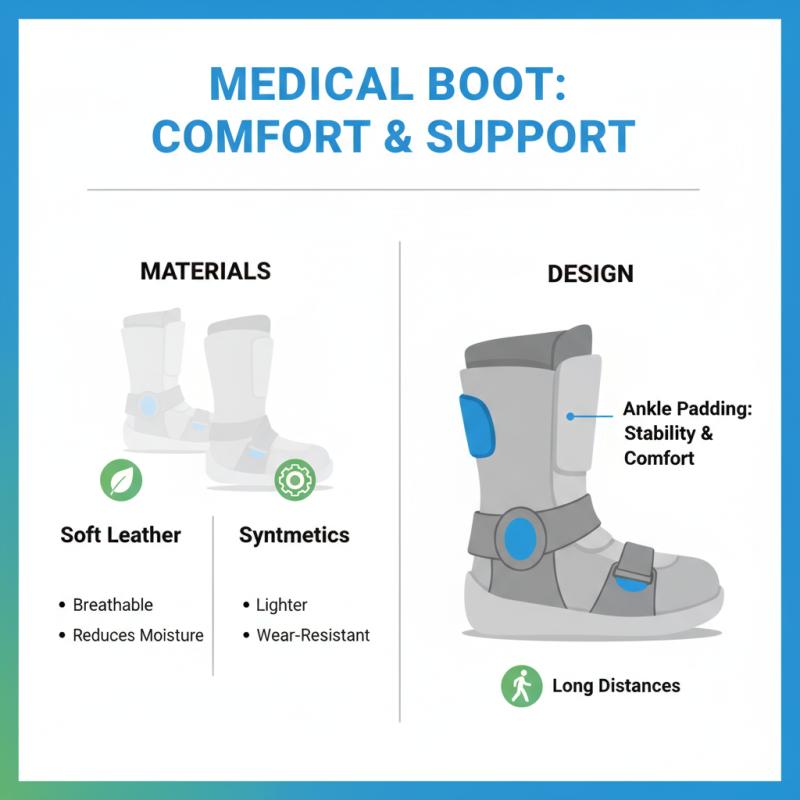
When choosing medical boots, material plays a vital role. Soft leather offers breathability and helps reduce moisture. Synthetic materials, on the other hand, are often lighter and more resistant to wear. This can be useful when you need to walk long distances. Look for boots that include padding around the ankles. This feature provides added stability and comfort.
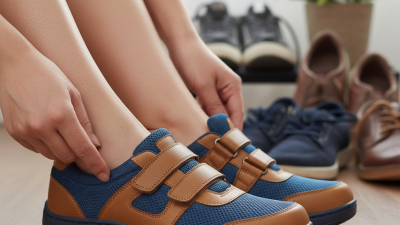
The design of the boots needs attention too. A wider toe box allows for natural movement. It can be beneficial for those recovering from injuries. Adjustable straps can help achieve a better fit. Too often, people underestimate the impact of poor fitting. A boot that is too tight may cause blisters, while a loose one can lead to instability.
Proper arch support is essential as well. It can alleviate pressure and improve posture during recovery. Don't forget to try the boots on your own foot type. Everyone's needs are different. Find what works for you. It’s okay to take time to reflect on which features matter most in your daily life.
Consulting Healthcare Professionals for Optimal Boot Selection
Choosing the right medical boots is crucial for recovery and comfort. Consulting healthcare professionals can significantly enhance this decision-making process. They can assess your specific needs, ensuring you select boots that provide adequate support and protection. According to a study published by the Journal of Foot and Ankle Research, approximately 30% of patients report dissatisfaction with their footwear during recovery. This indicates a clear need for proper guidance.
When discussing your options with a healthcare provider, be specific about your condition. Discuss any injuries or pain you experience. Proper footwear can influence healing time. Consider sharing your lifestyle—active or sedentary—because suitable boots vary greatly based on activity levels.
Tip: Always try on medical boots while standing. This helps gauge comfort and support accurately.
Some healthcare professionals may recommend custom solutions. However, many patients overlook this option. Not every medical boot fits every foot type seamlessly. You may find a boot that seems
perfect but may not perform well for your specific needs.
Tip: Keep a journal of your experiences. Note what works and what doesn’t. Regularly revisit this to refine your choices.
Engaging with experts helps minimize the trial-and-error phase. It’s important to remind yourself that the right boot can lead to a significant improvement in your quality of life.